Welcome to Maid Spin, the personal website of iklone. I write about about otaku culture as well as history, philosophy and mythology.
My interests range from anime & programming to mediaevalism & navigation. Hopefully something on this site will interest you.
I'm a devotee of the late '90s / early '00s era of anime, as well as a steadfast lover of maids. My favourite anime is Mahoromatic. I also love the works of Tomino and old Gainax.
To contact me see my contact page.
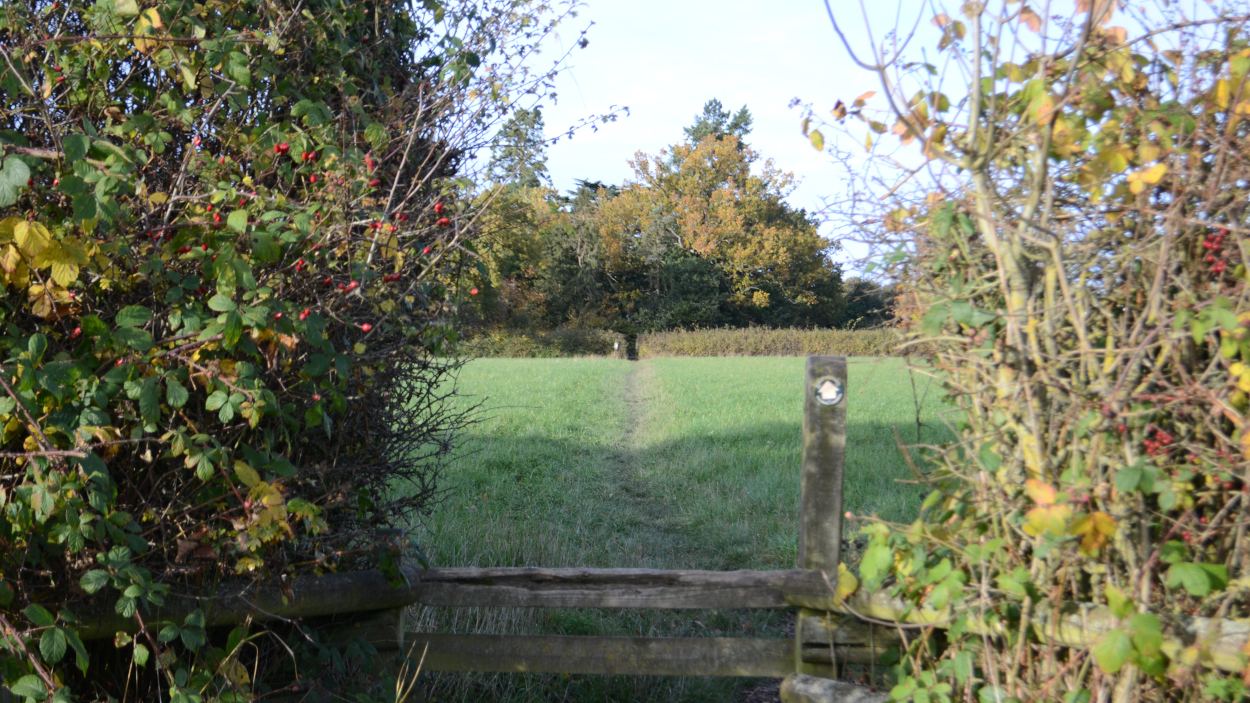
In the County of Warwickshire one will find England in miniature. A county of great variation and disparate cultures, at the "Heart of England" in many ways, but also modest and unconcerned with pageantry. Although Warwickshire is indeed my home county, the place where I spent the majority of my childhood and still consider my own "shire", I will admit that she is rather ordinary. I imagine given a country-wide pop-quiz on English geography, Warwickshire would land somewhat near the bottom of the league-table in recognisability; but it is this modest persona which is her gilded trait. Her exploits and famous sons are known across the world, but like a humble mother she hardly steps into the limelight, preferring to support from the rear. Even if you mightn't know her by name, by her fruits you actually know her well.
Of all the counties Warwickshire sits the furthest distance from the coast, being firmly landlocked on all sides by a hundred miles. Her mightiest river is the Avon, which bisects the county East-to-West. This split constitutes the first of the many divisions which split her in two. North of the Avon the land is flat and fertile, being covered in times-past by the mighty Forest of Arden, but today being swathes of cropland. South of the river begins the rolling hills of the Cotswolds, upon which the early Britons began the prosperous industry of sheep-herding and wool production. By the time the Caesars arrived the economic ecosystem which would be the backbone of the county was already in place: lumber, fur and game from the great forest would be taken south to the river, while wool and grains would be taken north from the south. These goods would crossover at three natural fording spots, places we now call Rugby, Warwick, and Stratford. From there the goods could flow down the river southwestwards towards the peoples of the Severn Valley and Wales. This separation bred two cultures, in the North one of hunters and in the South one of shepherds: much like the brothers Cain & Abel. The Romans would be the first to try and conquer the forest, building the most extensive Roman infrastructure project in Britain through its heart: Watling Street. Being the most vital road in Roman Britannia, it connected the port Dover through London into the centre of the country, allowing the riches of the fertile land of the Midlands to funnel Southeast (instead of Southwest) for the first time. This road remained the central spine of the entire nation for nearly two thousand years, and is still used today (with the new HS2 line indeed following it's path).
But while the land has been inhabited since time immemorial, the shape of the county really only emerged during that misty era known as the "Anglosaxon Period". The area was settled by Angles, who settled along the banks of the river Tame, the second river of the county. Rather than flowing southeast to the Severn, the Tame instead flows northwest into the Trent, which formed the perfect in-road to the county for the marauding Angles as they sailed their longboats inland from the North Sea. Tamworth, which straddles Warwickshire & Staffordshire, is the point at which Watling Street fords the River Tame, and the advantages this geography brought lead to the town becoming the capital of one of the mightiest Kingdoms in England: Mercia, where the great kings would hold court. It was in this period that the North of the county first started to develop its own character. The cities of Tamworth (now only a town), Coventry and Wolverhampton were founded, and became some of the biggest settlements in mediaeval England. Being connected to the Trent these areas were culturally more Northern and Anglo; while the Avon Valley remained more Southern, and for a impressively long time, more Celtic due to its older history. This split remains until this day, with a decidedly more "Northern" feel to these cities. However between these two regions the great Forest of Arden remained, although her edges were slowly being scraped away at by axe and plough.
Eventually the Kingdom of Mercia fell to Viking Invaders, the realm being liberated by King Alfred's Christian Army in the year 878. To protect his new "England" from the heathen threat, Alfred devised some of the most advanced and centralised feudal laws of his era; one of which was dividing his land amongst his Earls in an ordered hierarchical system. This "shiring" is the temporal birthday of all of our counties, and was when the term "Warwickshire" first came into parlance. Centred around the bridge-town of Warwick, the borders were set purposefully to divide the Mercian heartlands in half, with Tamworth City itself being divided in twain between Warks & Staffs, leading to her decline as a economic & political centre. Instead Coventry took her place as the great city of the Midlands, becoming the nexus for the economy of central England for the next several centuries. While not thought of particularly kindly today, Coventry is a major settlement in English history. As "The City of Three Spires" it became renowned as a bustling centre for religion, industry and trade. We have of course the famous tale of Lady Godiva, "Lady of the Mercians", who rode through Coventry city-centre buck-naked upon a white mare in order to persuade her husband to lower taxes on the commonfolk. To protect her modesty the denizens of Coventry promised to shutter their windows as she rode past, and all did except for little "Peeping Tom", who snuck a look at her through the crack in his bedroom window, thus coining a phrase. Godiva, similar to Robin Hood, became a heroic symbol of the downtrodden working class, and an initial step in the gradual democratisation of the country. Another phrase is not so favourable to poor old Cov: to be "sent to Coventry" still means to be ostracised or separated from power, as it was where the King would would send unfavourable nobles in order to exile them to provincial irrelevancy.
Another hero of the county, not much known outside of its borders, is "Guy of Warwick". Guy was a lower noble's son who fell in love with the Earl of Warwick's daughter. In order to gain her hand, the Earl had Guy "earn his spurs" on a series of Herculean tasks to slay seven wild beasts. Much of the details of these quests are left up to the imagination of the contemporary bard, but the most famous is the "Dun Cow". A giant, aberrant and carnivorous cow who left her normal grazing lands on the Long Mynd and came arampaging through the fields of Eastern Warwickshire causing destruction and mayhem, devouring maidens and the like. Sir Guy valiantly battles the beast, eventually slaying it by setting it on fire. He carries its charred skeleton back to Warwick Castle where it is still displayed today (for a fee). But Guy's tale is not a happy one. Upon slaying the monsters required and gaining permission to marry his princess, Guy fell into a deep Christian guilt for killing so many of God's creations. So instead of marriage he sets forth on a pilgrimage to Jerusalem (during which he gets up to more questing), and on his return he finds employment as a lowly footman to the princess, who never recognises him for his heavy beard. It is only on his deathbed that she realises, but it is too late and she finds her beloved dead in a hermit's cave on the banks of the Avon.
Over the latter half of the mediaeval period several changes passed over the county. The The Earldom of Warwick, as it was became, was one of the most prosperous titles in England, with the Earl earning the moniker of "Kingmaker" as seen in Shakespeare's Henry VI (we'll get onto Will in a moment). The moniker expresses the realpolitick of the time: in order to retain the crown a King must have Warwick on his side. Gaining Warwick's disfavour ended up dethroning two Kings: Henry VI and Edward IV, with the county's relevance peaking in that era known as the "War of the Roses". Over this era much of the old Forest was cut down, much of it to contribute towards the Earl's army during the Hundred Year's War. Today only small remnants of the forest remains, with its memory being held in placenames and forgotten thickets. It it said that while in most of England hedges were erected around fields, in Warwickshire the fields were instead carved out of the woods. It was during the final decades of Arden that Warwickshire birthed her indisputably most famous son, the Bard of England.
William Shakespeare was born in the town of Stratford in 1564, being educated in the grammar school there before travelling down Watling Street to find his fortune in London Town. It would be a folly to attempt to summarise his conquests there in detail, nor his influence on literary culture which I'm sure you all know well, but sufficed to say that by the death of Queen Elizabeth I he had become the pre-eminent author of his time, and was to become something even more than that in the centuries after his death. I think that Shakespeare's works have distinct qualities in tune with his homeland. The wit of the Midlands, a bittersweet melancholy of a changed land, the moral greyness of conflict. But the county itself also gained much from him, Stratford is one of the most visited towns in the country (especially from Chinese tourists), and the mysteries of his life here have made the county one of literary pilgrimage for many across the world.
During this period the county also became (in)famous for its involvement in the latent counter-reformation. Many important families of the area remained Roman Catholic after the break with Rome, sometimes openly sometimes not. But due to their wealth and power they were able to keep it quiet for far longer than the King or Parliament would have liked. This religious conservatism came to a head in 1605 and the much-commemorated "Gunpowder Plot". While Guy Fawkes (no relation) has become the figurehead of the attack, its real ringleader was rather a young Robert Catesby of Henley-in-Arden, Warwickshire. Just as in Shakespeare's Midsummer Night's Dream, the Forest of Arden hid amongst its foliage the remnants of an older religion, and in its green clearings they plotted; and so the forest had to be destroyed. During the reprisals and eventually ensuing civil war, Warwickshire was rooted up and many of her ancient families who had lorded there since William the Bastard and beyond were deposed of and executed for crimes against God and Parliament, with much of the county's wealth being syphoned away to Roundhead counties. The first major battle of the Civil War also occurred in South Warwickshire in 1642, when the Royal Army of King Charles fought Parliament in the Battle of Edgehill as they were attempting to march on London. While tactically inconclusive, the battle was a strategic disaster for the crown from which it never recovered as it scared off any mass uprising in his support. But I like to fancy that the county as a whole remained quietly royalist throughout the interregnum, although such a title must be handed to her western neighbour more readily.
After this beating, the county stayed quiet for several generations, and in fact the Avon Valley would never again see such national relevance. Instead it was the Tame's time to rise once. As I previously mentioned, the two rivers are relatively close to one another, but flow in opposite directions. In fact the land between them forms the easiest path from each river basin to the other. With the forest now cleared, infrastructure was slowly built to connect the two in the form of the canal network which covers much of the county today. The nexus of these channels was the small town of Birmingham, in the county's northern fringe. Over the next century or two this town would grow to become the most productive industrial centre on Earth, seeing the invention of the steam engine itself within its boundaries by inventor James Watt in 1776. The city ballooned due to its central position, massive coal deposits, and innovative populace. At its peak Birmingham supplied the world with manufactured products on a level unmatched in history: no city before or since has ever taken up such a proportion of global industry as Birmingham did during the mid 19th century. This industrial mega-region spread out across the coalfields of Southern Staffordshire too, creating the slightly terrifyingly named "Black Country". When visiting the area today, this stark contrast with the south is most obvious. The urban (now) post-industrial landscape dotted with chimney stacks and decaying monuments to Victorian grandeur, all compared with the idyllic rolling countryside of the still rural Avonland, still stuck in a mediaeval fantasy taken from the pages of a Shakespearian comedy, or indeed from the pages of a work by Warwickshire's second bard: JRR Tolkien. Growing up in the midst of this very conflict, the young Tolkien saw his village on the outskirts of Birmingham be swallowed whole by the unstoppable dark forces of the Black Country and "progress". The Lord of the Rings pulls greatly from this upbringing, the conflicts of a rapidly industrialising civilisation mythologised through the lens of experience gained in northern Warwickshire. Just as you can do the "Shakespeare tour", you can and I would recommend you to do the "Tolkien tour": visiting Mirkwood (Moseley Bog), the Two Towers (Perrotts Folly & Edgbaston Waterworks), and Hobbiton (Sarehole, albeit much degraded). But in his writings Tolkien espouses a very nuanced view on this contrast, far moreso than I can convey. Both Mordor and the Shire are irrevocably changed by human hands; the deforestation of Arden precipitated and was necessary for the later expansion of Birmingham. And such is the folly of mortal men.
While the north churned into the future, the south reclined into a quiet pastiche. The spa-town boom of the late Victorian Era brought great focus on the mineral springs of Leamington in particular, which bubble up a few miles east of Warwick. A regency-era architectural paragon arose around these waters, with streets that wouldn't be out of fashion in Pimlico. The great and the good would holiday in the town and surrounding areas, taking in the agrarian simplicity of "Shakespeare's Country". The most famous event of the town's heyday came with a grand visit by Queen Victoria in 1838 (during which the town was renamed "Royal Leamington Spa"). For her visit a Great Raja of India was also invited, who brought along with him a lavish entourage of servants and several elephants, carried up the Avon from Bristol in elaborate barges, or so the story goes. You can still visit the "Elephant Wash", a slipway built to bring the elephants ashore made by destroying several inconveniently placed houses. Such a scene must be the perfect encapsulation of the absurdity and grandeur of Victorian High Society.
However in time the Sauron of the north was indeed duly defeated, and the industry of proud orcish Birmingham was quashed in favour of the workshops of the Western "Undying Lands" and the Sindarin Elves of the Far East. Much of northern Warwickshire has since declined into varying levels of urban decay through a near century of unfortunate events. The coalfields of Sutton ran dry. The canals of Birmingham became technologically obsolete. And old Coventry was flattened by Nazi bombs. But through the fungal malaise there are still gems: Jaguar-Landrover still operate the biggest car manufactury in England in the area. The HS2 megaproject promises to bring future prosperity. And the region as a whole has certainly made its mark on world-culture. Take sports for example; the great game of football has roots firmly tethered to the area. In Atherstone they still play the original form of the game involving pigs bladders, the entire town as a pitch, and gratuitous levels of fisticuff violence. Aston Villa, (probably) the oldest and (definitely) the most royal football club in the world is based in Birmingham. And the game of Rugby of course comes from the eponymous Warwickshire town too, in fact the story goes that a precocious schoolboy got tired of always kicking the football around, and decided just to pick it up and run. Which for some reason the schoolmaster found so ingenious he invented a new ruleset to allow for such moves. But it doesn't even end there: the modern game of tennis, developing out of the archaic and byzantine (small b) real tennis, was first devised upon the manicured lawns of Leamington Spa as the manufactured pleasant pastime of the middle class. What other land can lay claim to so much influential sporting history?
All this really takes us up to the present day. Warwickshire today is a county so divided culturally it was eventually split up into separately governed councils, on the surface it is but an average county, but inside you can find all of England. The North & the South; the past & the present; the good & the bad. It's a county somehow forgotten despite her indisputable influence on not just England, but the world. For me it is home and always will be, but it may not be too bold of me to say that I believe it is in someway home for all Englanders. The heart of the nation which has felt every blow time has hit us with, shaped as much by the hands of Englishmen than any other into a garden & a prison of our own design. The coat of arms of the county is the bear & ragged staff, in a reference to bear-baiting. The symbolism is clear: the most wild and fearsome of forest animals defeated, leashed and forced to perform. More perfect imagery could hardly be imagined, and I'm sure the irony of the fate of Sir Guy is not lost on you all. Your opinions on the joys & sorrows of Warwickshire both past & present shine an indicative light on your views of this nation as a whole. Buffeted by the squalls of history, divided Warwickshire remains, united.