Welcome to Maid Spin, the personal website of iklone. I write about about otaku culture as well as history, philosophy and mythology.
My interests range from anime & programming to mediaevalism & navigation. Hopefully something on this site will interest you.
I'm a devotee of the late '90s / early '00s era of anime, as well as a steadfast lover of maids. My favourite anime is Mahoromatic. I also love the works of Tomino and old Gainax.
To contact me see my contact page.
One of my New Year's Resolutions this January was to visit the cinema more often. I suppose it's not in the general spirit of most resolutions, but its something I enjoy doing but often go months without bothering to cough up the 10 odd quid to watch something I may or may not enjoy. So far this year I have been to see eight different screenings, which feels like a lot but really it's only one evening every few weeks. I've made a list in the appendix below if you want to get my quick recommendations.
Most recently I went to see the film Obsession, on its opening night no less. I didn't have any particular reason, it was just the most interesting thing showing on the evening I had free. As a rule I don't like horror films, which this one was, and have only seen a handful before. That's not to say I don't find them scary, the shock-value jumpscare flicks which flash gore before you turn my stomach like, and the psychological tricks of suspense and tension make me seize up like a child. I have a particularly high propensity towards disgust, things which disturb me can often embed themselves like ticks into my psyche for weeks, conjuring vivid recollections of nasty images before my eyes like some petty spectre. However there is a form of horror film I do really enjoy. They can be mostly encompassed by the term "folk horror", and they rely on a shift in the underlying rules of human society. Often this shift is minor, creeping slowly into the protagonist's (and the viewer's) cognisance as they slowly uncover more and more secrets about whatever society they have wandered into. Robin Hardy's Wicker Man is the archetypal example, where a Scottish Policeman is sent to investigate a small Hebridean Island, and slowly uncovers that the islanders have forgone their presbyterian convictions and returned to a sinister and evil heathenism. The more recent "Midsommar" is similar and also excellent. But this form of horror appears in less orthodox forms too. The Truman Show uses the same creeping realisation of conspiracy to drive its uncanny feel, as does Groundhog Day to a lesser extent. The 1960s TV show "The Prisoner" is another excellent example, where a retired British spy gets kidnapped to a strange island run by a hidden authoritarian prisonguard who enforces a false happiness and collectivity upon the inhabitants through psychological social pressure and the threat of violence. The Higurashi VN and anime could also be put into this category, especially the first few arcs as the protagonist slowly realises the quaint little village is not as it seems, and each girl is hiding some secret. It's unfortunate that Ryukishi starts to overutilise gory scenes later on, which I find much less interesting.
There is a helplessness to such stories. The optimistic world you believed in crumbles away revealing a corrupted society that runs off rules you find repulsive. But what can an individual do against the social collective? I think for the self-conscious this dread of misunderstanding or breaking the rules of society is every day but manageable in a world which broadly runs of reasonable norms; but we all harbour a niggling fear that the bald-face of the social egregore is in reality truly inpersonable and demonic, but that we would have to live with it anyway. Orwell's 1984 describes this fear well, a world through which you could quite happily slither through unthinking and innocent, but if you choose to turn the wrong corner or even just misunderstand, the disgusting and fake inner entrails of it will crush you into a human paste.
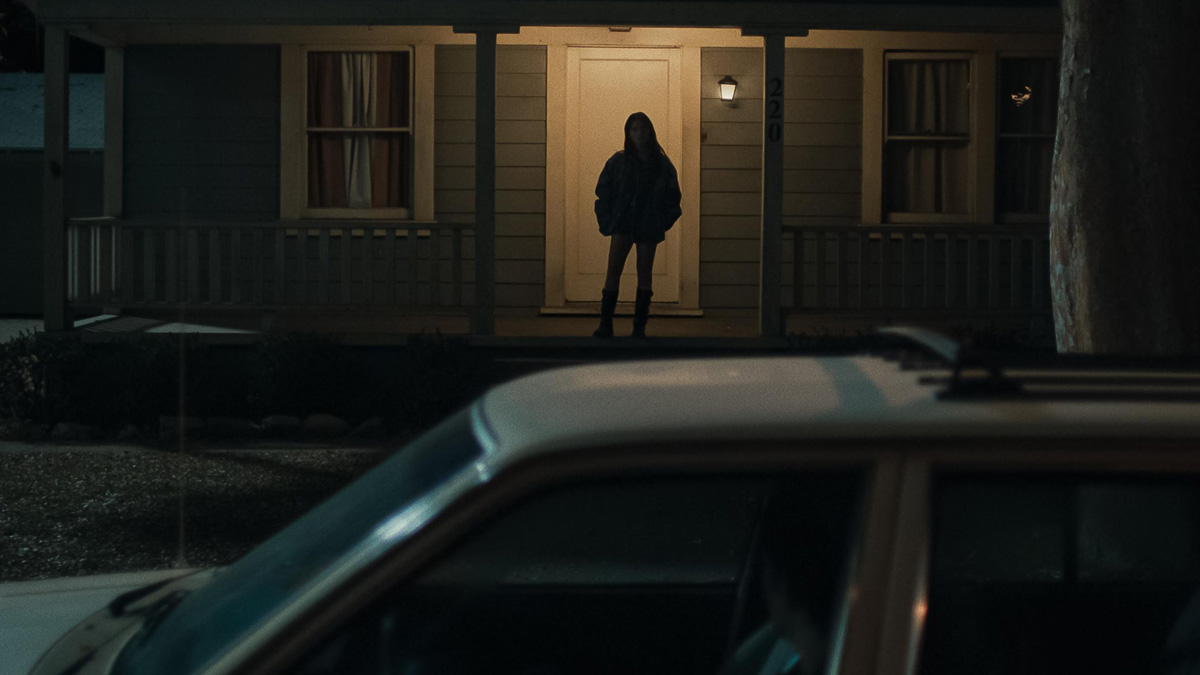
The film Obsession expressed this fear in a different way. It did indeed use a few jumpscare scenes, and much of the scene-to-scene drama was driven by well timed tension-building. However the real underlying horror of it all was the inversion of "the village secret", and the upturning of that singular and most sacred rule: "love". If any of this sounds interesting to you I'd recommend going to watch it, its still in cinema after all; and while I won't be spoiling it per-se, I will now be discussing the major themes and how they were expressed without regard for "spoilers". So the basic premise is that our sensitive-young-man protagonist (called "Bear" for some reason) makes a wish on a magic stick that his crush (Nicky) would "love him more than anything in the world". At first this seems to work beautifully, with Nicky falling madly in love with him, but pretty quickly the monkey's paw curls and her devotion begins to take over her mind. She stops going out and spends all day just standing there waiting for him to return from work. One of the most horrifying scenes involved Bear waking up to find Nicky had disappeared from bed, but as his eyes adjusted he sees her standing there in a dark corner just staring at him. Her entire life and personality is whittled away until all she has is an obsessive and unnatural love. But this love doesn't make Bear happy, the falseness of it breaks that all-important illusion of choice required to believe in another. If he plays along and reciprocates then all seems well, but as soon as he makes any minor move off the script, Nicky's true falseness becomes evident and shatters the illusion. To the outside world he keeps up appearances, harbouring this terrible secret to himself, coming home each night to an increasingly dysfunctional girlfriend who he feels is two steps away from mental breakdown if he doesn't keep up this facade of love he's wished himself into. Here we see the folk-horror on its head. Bear is the one holding the evil secret, hiding it from the world until it inevitably overtakes him. Those things we take for granted, the common understandings of the human experience we just assume everyone else has already, are broken. Love itself is corrupted and inverted. It's horrible.